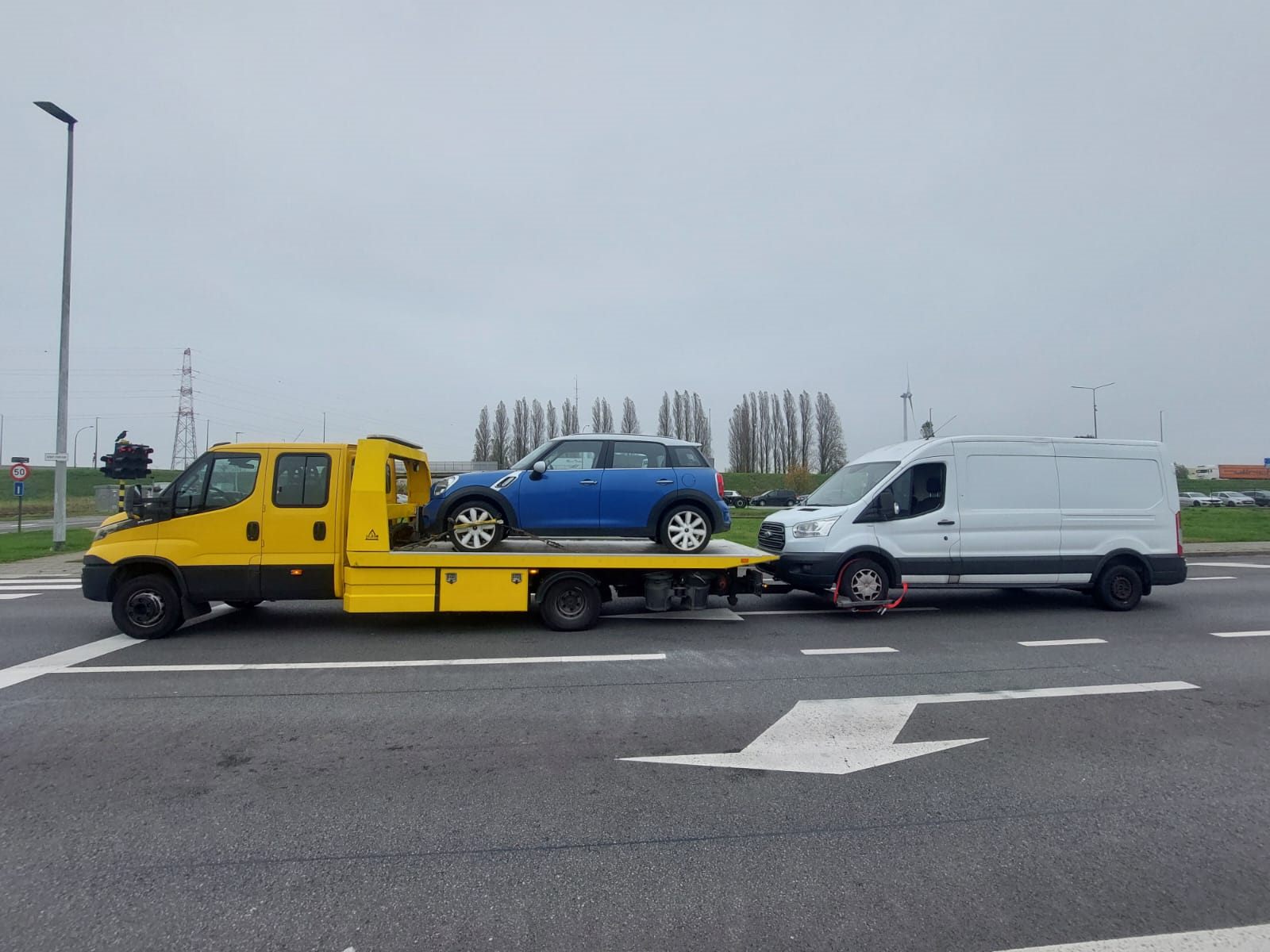
Vans we recover
- Small vans: Berlingo, Caddy, Partner, Transit Connect, Kangoo
- Medium and large panel vans: Transit Custom and Transit, Sprinter, Crafter, Vivaro, Trafic, Ducato, Boxer, Master
- Luton and box vans, dropsides and tippers up to 3.5 t
- Minibuses and campervans: tell us the length and height
What we need to know
The model, the wheelbase (short, medium or long), the roof height, and roughly how much is in the back. A long-wheelbase Sprinter loaded with tools needs a bigger truck than an empty Caddy. Getting it right on the phone means the first truck can take it.
Typical van problems in London
Most London vans are diesels doing short trips, so DPF and EGR faults and AdBlue warnings are common. A van in limp mode, or one that has gone into “no start” after the AdBlue countdown, needs to go to a garage. Clutches wear quickly on multi-drop work, and starter motors and alternators fail. If it’s a battery, the operator tries a jump first.
Recovering from awkward places
Building sites, loading bays, underground car parks with a 2.1 m height limit, narrow mews: tell us where the van is and we’ll send something that fits. For a van stuck in mud on a site, see winching out stuck vehicles.
FAQ
Questions people ask
Can you recover a loaded van?
Yes, up to the truck’s rated payload. Tell us roughly what’s in the back. Very heavy loads may need to come out first.
Do you recover vans over 3.5 tonnes?
Light commercials up to 3.5 t are our everyday work. For anything heavier, call us with the vehicle details and we’ll check whether a heavy recovery truck is available near you.
My van is in limp mode. Can I drive it to the garage?
Limp mode protects the engine, but driving far on it can make things worse, and it’s slow and risky on fast roads. If the garage isn’t round the corner, have it towed.